Prairie Waters Education and Research Center
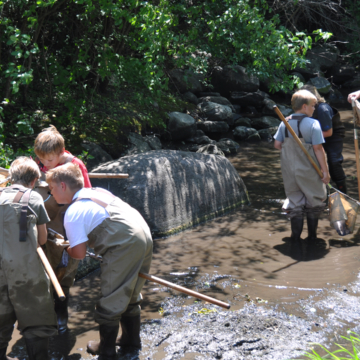
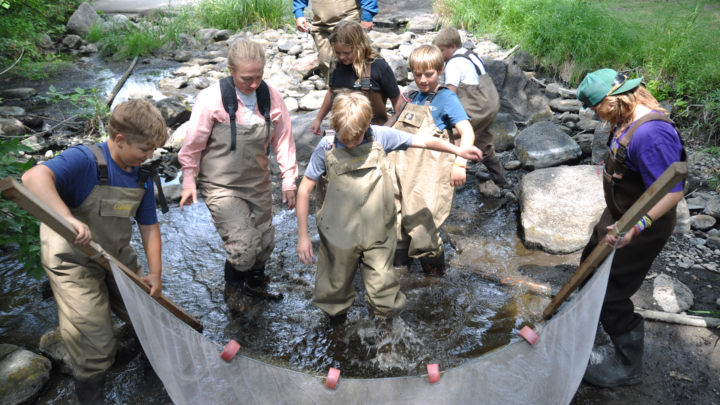
Prairie Waters hosts students, professionals, and other community groups to educate about water resources and the organisms found in water ecosystems.
The Mission of Prairie Waters
Prairie Waters Education and Research Center is an environmental education center specializing in water education and water-related research. Located just outside Valley City at the Valley City National Fish Hatchery, the dedicated researchers and educators on staff will be happy to help answer any questions you have or give you more information.
Advisory Board Members
- Mary Lee Nielson
- Joelle Manlove, Valley City Jr. High
- Amanda Oanes, West Fargo High School
- Marty Egeland, North Dakota Game and Fish
- Tyler Modlin, Fort Ransom State Park
- Danielle Dinger, NDSU Extension
- Erica Buchholz, Valley City State University
- Lane Dahl, BNI Coal
Visiting Prairie Waters
Schedule a field trip for your K-12 class, community organization or group, or simply visit us yourself! You can also request a visit from our dedicated educators to your classroom or space to learn more about water education, resources, water organisms and much more.
Summer Camps
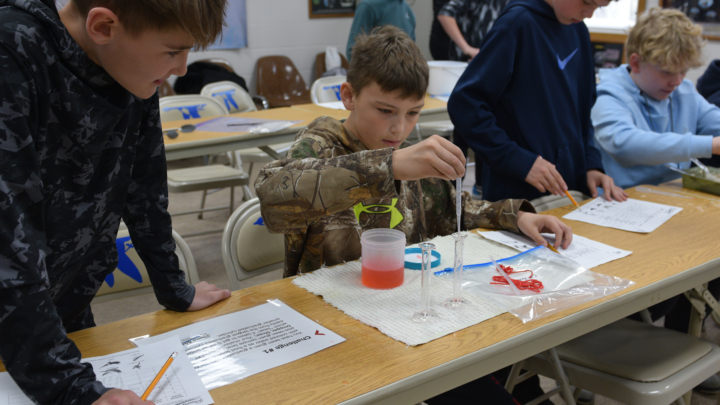
PWERC hosts two summer camps each year – these are great opportunities for students to learn more about water ecosystems and have fun doing it!
Splashin’ Around at Prairie Waters | July 20 – 22, 2026
This camp is designed for kids entering 5th and 6th grades. Activities include:
- Wading in streams
- Find out what lives in our waters with a water hunt
- Learn about stream health and do water testing
- Other fun outdoor activities
Fishin’ Around the Prairie Waters | July 27 – 29, 2026
This camp is designed for kids entering 7th and 8th grades. Activities include:
- Exploring fish habitats
- Canoeing the Sheyenne River
- Boat fishing
- Catching fish without fishing rods
- Other fun outdoor activities
There will be a $95.00 registration fee that includes transportation – the bus leaves VCSU at 8:00 a.m. and returns at 5:00 p.m., lunch, snacks, and a t-shirt.
STEM Explorers: Water Research Institute | June 9 – 11, 2026
This camp is designed for students who have completed grades 9 – 12.
Activities include:
- Measuring water quality
- Capturing aquatic invertebrates
- Processing invertebrate samples
- Capturing fish and studying populations
Camp sessions will vary daily, students can sign up for one, two or all three days. VCSU offers up to $75 in mileage reimbursement available to each participant.
Registration is open April 21st – May 31st.
Register for the STEM Explorers camp here
Be sure to register early – camps fill up fast!
Education
Prairie Waters is proud to provide fun, engaging educational opportunities for students, teachers, and community members. Outlined below are the educational goals we strive to meet and opportunities provided to student groups we host.
If there are topics not on our lists that you would like us to cover, we can design a specific program to meet your needs.
Animal Migration – students play a game to model migration and learn about the importance of wetlands to migrating birds. (migration PowerPoint), Migration game.
- ND Science Standards – 3-LS4-3, 3-LS2-1
- DCI- LS4.C, LS2.D
Creepy, Crawly Macros – students learn about the bugs found in streams and lakes, adaptations, and how they are impacted by water quality. Macro PowerPoint, specimens, Macro Mayhem game.
- ND Science Standards – K-LS1-1, K-ESS3-3, K-2-ET1-1, 1-LS1-1, 1-LS1-2, 2-LS4-1, 3-LS4-2, 3-LS4-3
- DCI- LS1.C, ESS3.A, ESS3.C, ET1.A, LS1.A, LS1.D, LS1.B, LS4.D, LS4.B, LS4.C
Mussels of North Dakota – students learn about the different kinds of mussels found in ND, examine mussel shells, and learn how mussels improve water quality. Mussel PowerPoint, shell game, (paper plate mussel).
- ND Science Standards – K-LS1-1, K-ESS3-1, K-ESS3-3, 1-LS1-1, 1-LS1-2, 1-LS3-1, 2-LS4-1, 3-LS4-3
DCI- LS1.A, LS1.B, LS1.C, LS1.D, LS4.C, LS4.D, ESS3.A, ESS3.C
Needs to Live – students learn about the basic needs of all organisms and play a game simulating competition for resources.
- ND Science Standards- K-LS1-1, K-ESS3-1, 2-LS2-1
- DCI- LS1.C, LS2.A, ESS3.A
Rain and Thunderstorms – students learn about rain and thunderstorms, make rain sticks, and create their own class thunderstorm. Rain PowerPoint, classroom thunderstorm with clapping, snapping, etc., Rainsticks craft.
- ND Science Standards – K-ESS2-1, K-ESS3-2, 3-ESS2-1, 3-ESS3-1
- DCI- ESS2.D, ESS3.B, ET1.A, ESS2.D, ESS3.B
Something Fishy – students learn about fish parts and how fish are different than humans and build a fish of their own to take home. Fish PowerPoint, fish tank tour, fish kite, Fashion-a-Fish.
- ND Science Standards – K-LS1-1, K-ESS3-1, K-ESS3-3, 1-LS1-1, 1-LS1-2, 1-LS3-1, 2-LS4-1, 3-LS2-1, 3-LS4-2, 3-LS4-3
- DCI- LS1.A, LS1.B, LS1.C, LS1.D, LS2.D, LS4.B, LS4.C, LS4.D, ESS3.A, ESS3.C
Water Animals of North Dakota – students learn about animals that live in and near water in ND by looking at and touching various furs, skulls, etc. Animal PowerPoint, Wild Box, Let the Cattail out of the Bag.
- ND Science Standards – K-LS1-1, K-ESS3-1, K-ESS3-3, 1-LS1-1, 1-LS1-2, 1-LS3-1, 2-LS4-1, 3-LS2-1, 3-LS4-2, 3-LS4-3
- DCI- LS1.C, ESS3.A, LS1.A, LS1.D, LS1.B
Water Cycle – students learn about the water cycle through demonstrations, activities, and games. Water Cycle PowerPoint, Incredible Journey game with bracelets, build a terrarium.
- ND Science Standards – K-PS3-1, K-LS1-1, K-ESS3-1, 2-PS1-4, 2-LS2-1, 2-ESS2-2, 2-ESS2-3
- DCI- PS3.B, LS1.C, ESS3.A, PS1.B, LS2.A, ESS2.B, ESS2.C
Animal Migration – students play a game to model migration and learn about the importance of wetlands and migrating birds. (migration PowerPoint), Migration game. (4th and 5th grade)
- ND Science Standards – MS-LS1-4, MS-LS2-4
- DCI- LS4.C, LS2.D, LS2.A, LS2.C, ESS3.C
Creepy, Crawly Macros – students learn about the bugs found in streams and lakes, adaptations, their role in ecosystems and how they are impacted by nonpoint source pollution. Macro PowerPoint, specimens, Macro Mayhem game. (4th – 6th grade)
- ND Science Standards – 4-LS1-1, MS-LS1-4, MS-LS2-4
- DCI- LS1.C, ESS3.A, ESS3.C, ET1.A, LS1.A, LS1.D, LS1.B, LS4.D, LS4.B, LS4.C, LS2.A, LS2.C
Something Fishy – students learn about fish parts and how fish are different than humans and build a fish of their own to take home. Fish PowerPoint, fish tank tour, Fashion-a-Fish, Fish ID Dichotomous Key.
- ND Science Standards – 4-LS1-1, MS-LS1-4, MS-LS2-4
- DCI– LS1.B, LS2.A, LS2.B, LS2.C
Geocaching – students use GPS units to find various caches and use the cache information to answer worksheet questions about wetlands. Geocaching activity.
- ND Science Standards- MS-LS1-5, ND Social Studies—G.6_12.4
- DCI– LS2.C
Invasive Species—students learn about what aquatic invasive species are and their effect on aquatic ecosystems.
- ND Science Standards- MSL2-1, MS
- DCI—LS2.A, LS2.C
H2Olympics—students compete in Water Olympics to investigate adhesion, cohesion, and surface tension of water.
- ND Science Standards- 5-LS1-1
- DCI- N/A
Macroinvertebrate Collection – students wear waders and use nets to collect macroinvertebrates found in streams.
- ND Science Standards- 4-LS1-1, MS-LS2-1, MS-LS2-2, MS- LS2-4, MS-LS2-5
- DCI- LS1.A, LS2.A, LS2.C, ET1.A, MS-ET1-4
Mussels of North Dakota – students learn about the different kinds of mussels found in ND, examine mussel shells and learn how mussels improve water quality. Mussel PowerPoint, shell game.
- ND Science Standards – 4-LS1-1, MS-LS2-1, MS-LS1-5, MS-LS2-4
- DCI– LS1.B, LS2.A, LS2.B, LS2.C
Watersheds – students learn about watersheds, point and nonpoint source pollution, and build watershed models. Watershed PowerPoint, branching out activity-watershed model, Seeing Watersheds activity, Color Me A Watershed activity.
- ND Science Standards – 4-ESS2-2, 5-ESS2-1, MS-ESS2-2, MS-ESS2-4, MS-ESS3-3, MS-ESS3-4
- DCI- ESS2.A, ESS2.B, ESS2.C, ESS3.C
Water Animals of North Dakota – students learn about animals that live in and near water in ND by looking at and touching various furs, skulls, etc. Animal PowerPoint, Wild Box, Let the Cattail out of the Bag.
- ND Science Standards – 4-LS1-1, MS-LS1-4, MS-LS2-4
- DCI- LS1.A, LS1.C, LS1.D, LS1.B, ESS3.C, ESS3.A
Water Flow – students play a game to learn about cubic feet per second (CFS) and flow. CFS/Flow PowerPoint, CFS ASAP activity
- ND Science Standards – 4-ESS2-1, 5-ESS2-1, MS-ESS2-2, MS-ESS3-3
- DCI- ESS2.A, ESS2.C, ESS2.C, ESS3.C
Water Quality with Chemistry – students learn about nonpoint source pollution and test water samples for various chemical parameters that affect the quality of the water. (chemistry PowerPoint), Green Kits
- ND Science Standards – 5-ESS3-1, MS-ESS3-3, MS-LS2-4 –
- DCI- PS1.A, ESS3.C, LS2.A, LS2.C
Water Quality with Macros – Students learn how non-point source pollution impacts aquatic macroinvertebrates and determine the health of the water in their stream by identifying the types of macroinvertebrates present. Macro Pollution tolerance activity
- ND Science Standards – 4-LS1-1, 5-ESS3-1, MS-ESS3-3, MS-ESS3-4, MS-LS2-1, MS-LS2-4, MS-LS2-5
- DCI- LS1.A, LS2.A, LS2.C, LS4.D, ESS3.C
Wetlands—students learn about wetlands, how they function to filter nonpoint source pollutants, and build wetland models.
- ND Science Standards— 5-ESS2-1, 5-ESS3-1, MS-ESS2-4, MS-ESS3-3, MS-ESS3-4, MS-LS2-3, MS-LS2-5
- DCI– ESS2.A, ESS2.E, ESS2.C, ESS3.C, LS2.A, LS4.D
Fish ID- Students learn about fish of ND and use a dichotomous key to identify various species.
- ND Science Standards-
- DCI-
Fish Seining – students learn about the different fish in North Dakota and catch fish in a stream using a seine net.
- ND Science Standards-
- DCI- LS2.A, LS2.C, LS4.C
Geocaching – students use GPS units to find various caches and use the cache information to answer worksheet questions about wetlands. Geocaching activity.
- ND Science Standards- LS2.C, MS-LS1-5, ND Social Studies—G.6_12.4
- DCI– LS2.C
Macroinvertebrate Collection – students wear waders and use nets to collect macroinvertebrates found in streams. (Macro PowerPoint), Collection.
- ND Science Standards – HS-LS2-6
- DCI- LS2.A, LS2.C
Macroinvertebrate Bioassessment– Students learn how nonpoint source pollution impacts aquatic macroinvertebrates and how some aquatic macroinvertebrates are more tolerant to pollution and water quality conditions than others, then use a magnifying scope to identify the macroinvertebrates in a “mock stream” to determine the water quality.
- ND Science Standards– HS-LS2-1, HS-LS2-2, HS-LS2-6, HS-LS2-8
- DCI—LS2.A, LS2.C, LS2.D
Mussels of North Dakota – students learn about the different kinds of mussels found in ND, examine mussel shells, and learn how mussels improve water quality. Mussel PowerPoint, shell game.
- ND Science Standards
- DCI– LS1.B, LS2.A, LS2.B, LS2.C
Stream Habitat Assessment – students walk along the stream and look at physical features to determine the general physical condition of the stream system and identify the location of a variety of common environmental problems within the stream’s corridor.
- ND Science Standards– HS-LS2-6, HS-ESS2-2, HS-ESS2-5 –
- DCI- LS2.A, LS2.C, ESS2.A, ESS2.C
Water Animals of North Dakota – students learn about animals that live in and near water in ND by looking at and touching various furs, skulls, etc. Animal PowerPoint, Wild Box.
- ND Science Standards
- DCI- LS1.A, LS1.C, LS1.D, LS1.B, ESS3.C, ESS3.A
Water Quality with Chemistry – students learn about nonpoint source pollution and test water samples for various parameters that affect the quality of the water. There are three options for this activity: A basic version using LaMotte Low-Cost monitoring kits with test-tabs, a more complex version using LaMotte Water Monitoring kits with titrations, or a technology version using more advanced equipment used by our ND River Watch program. (Water Chem PowerPoint), Green Kits, LaMotte Titration Kits, Sonde/Turbidimeter)
- ND Science Standards- HS-LS2-7, HS-ESS3-4
- DCI- LS2.C
- Snowflakes and Ice Crystals – examine the science of snow and ice.
- Snow and Tell – Investigate snow pack and snow water equivalency. Describe the factors that affect snowpack runoff.
- Surviving Winter – learn about plant and animal adaptations that help them survive winter.
- Groovy Glaciers – Participate in an activity that demonstrates how glaciers formed North Dakota’s landscape during the last ice age.
Meet our Staff

Science
- Rhoades Science Center, 104c